I’ve been in love with sketching for a while now. Ever since I took a dynamic sketching course 2 years ago. I’m not particularly good at it, and because my main focus is 3D environment art, I often find myself asking the question:
How much time should I really be putting into this?
There is always something more you can learn related to CG, so most of the time, I don’t have that much space in my schedule for drawing. And when I’m not feeling super motivated, it becomes even easier to brush it off as… not that important.
Yeah, I enjoy it, but does it actually help me become a better 3D artist?
It doesn’t seem directly related, so maybe it should just stay a hobby, right?
I couldn’t stop thinking about it, though. So I decided to dive a bit deeper and ask myself:
Is there any real connection between drawing and being a CG artist? Can one help the other, or are they just two separate worlds?
Note: When I say drawing here, I mean drawing in the broadest sense — sketching, drawing digitally or traditionally, any 2D technique really.
Cought between priorities
I always tried to squeeze some kind of drawing into my schedule. But honestly, sometimes it feels like pressure. Especially when time is tight. And without a clear reason for why this matters, it’s just too easy to skip a day… and then that day becomes a week, and so on.
But here’s the thing: every time I skip it, I feel guilty.
It’s obvious I can’t just let it go. Drawing means something to me so I keep coming back to it. But at the same time, I can’t keep trying to fill all my buckets at once. I can’t be good at everything. Priorities are real.
And my number one priority is to become 3D environment artist. So I needed to figure out if sketching can actually be useful to me.
Because, truthfully, we’ve all heard it: 3D artists don’t need to know how to draw. It’s all about your 3D skills and your software knowledge. And… yes, for what I know, that’s true. You absolutely can be a 3D artist without ever picking up a pencil.
But can drawing still help? Can it actually make you better?
Some ways drawing helps
Here’s what I found after digging into it (and also from my experience so far):
Composition thumbnails
Doing small sketches and quick thumbnails forces you to think about balance, scale, and focal points. It helps you design your scenes more intentionally, rather than placing things randomly and hoping they work. Studying the work of successful environment artists or analyzing movie shots this way can also teach you a lot. You start to connect the dots — why something works, not just that it does. Essentially, you’re reverse-engineering great compositions, and through that process, becoming a better artist yourself.
Lighting and Mood studies
Doing quick value studies can help you visualize lighting setups before you even open your 3D scene. You get a sense of how light shapes mood, where the eye is drawn and what gets lost in the shadow. Lighting can make or break a scene so it seems especially valuable to practice this skill as an environment artist.
Ideation sketches
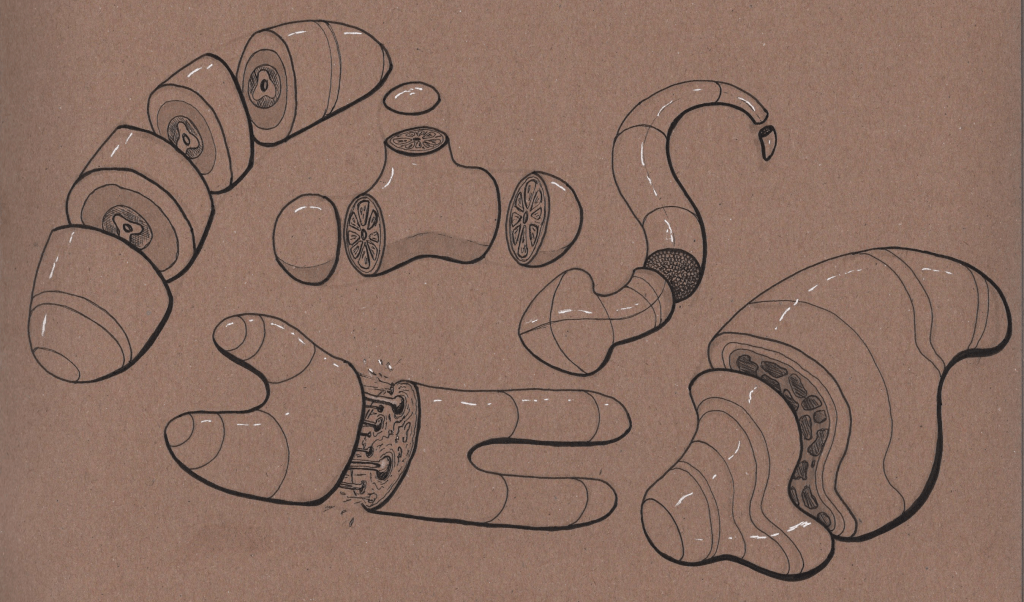
If you can quickly sketch out a few variations of a prop or environment piece you want to create, you’re much clearer on the direction before you start modeling. It then becomes less about guessing and more about deciding. You know where you’re headed, so now you are just deciding how to get there.
Color script
Doing quick color studies or paint-overs on your 3D blockouts helps you explore color harmony without the pain of tweaking shaders blindly inside the engine. Again, just like with ideation sketches, you’re not guessing — you know what do you want to achieve.
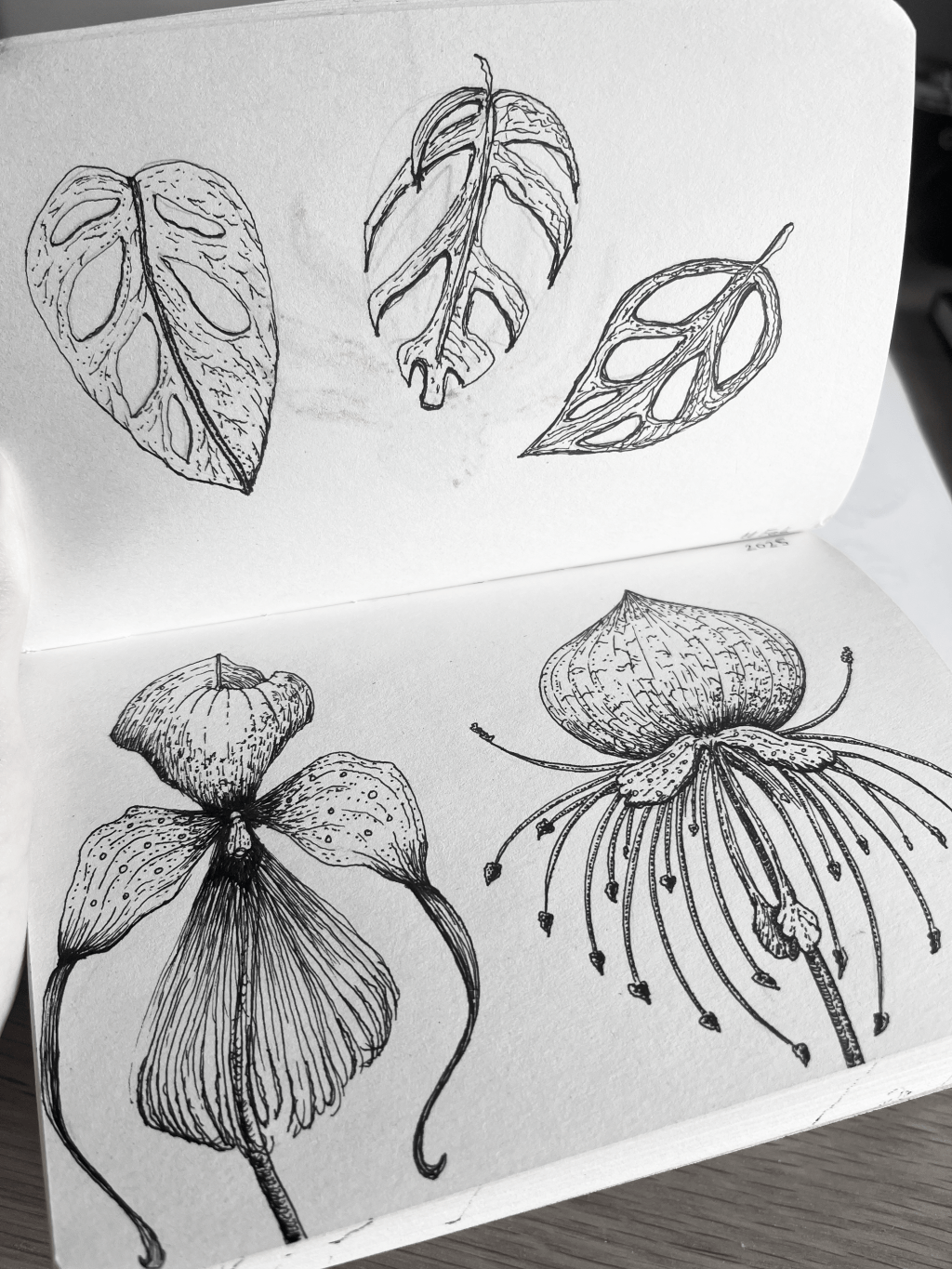
Observational drawing
Sketching from life builds your visual library. You learn how things are actually constructed, how materials behave, where wear and tear naturally happens. You also practice breaking down complex objects into simple shapes — which is exactly what we do when modeling.
Honestly, I feel like this one is the most valuable. Observational drawing makes you see the world differently. It sharpens your eye, and that skill directly translates into better decisions when you’re modeling, texturing, or lighting a scene.
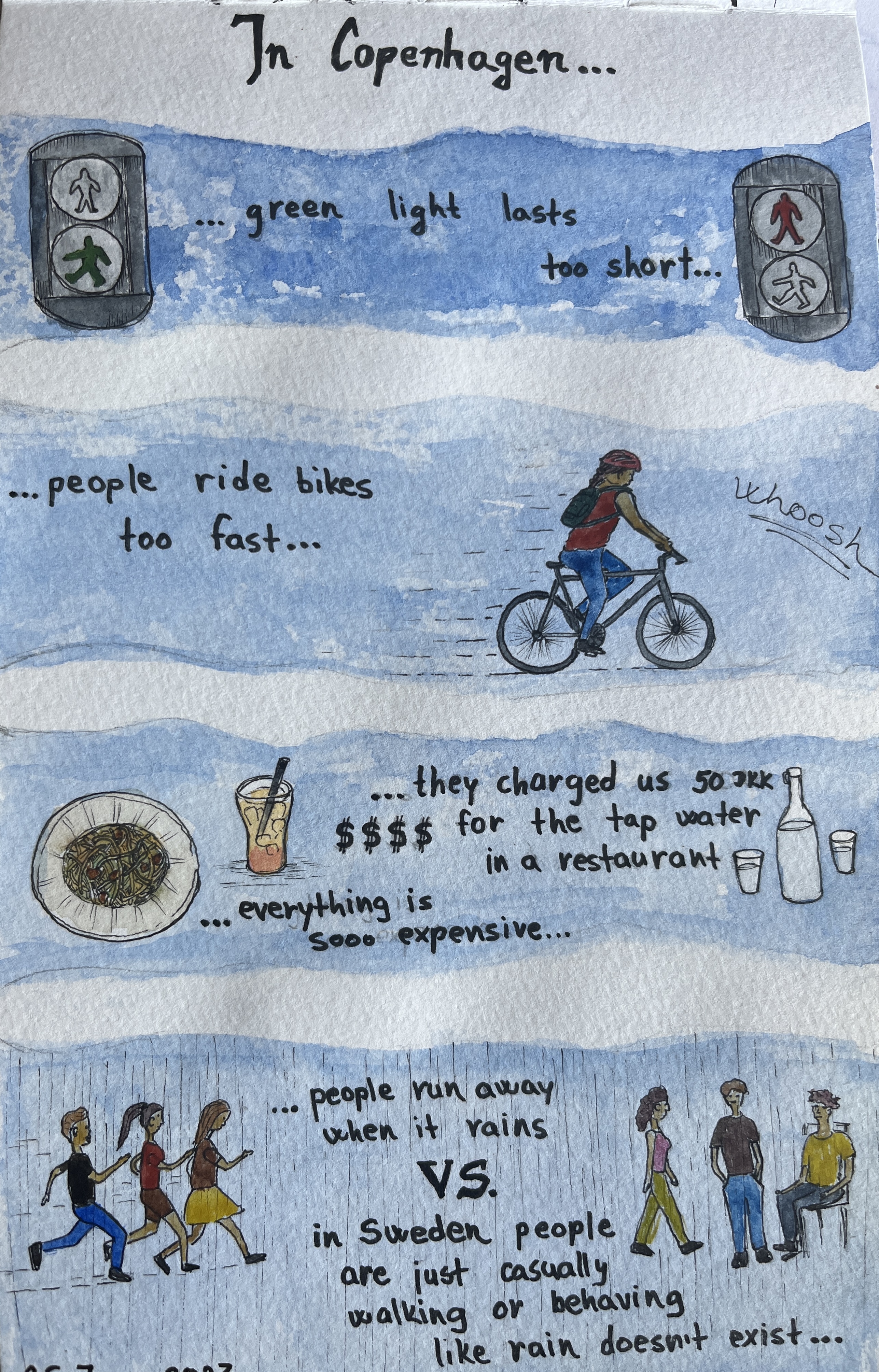
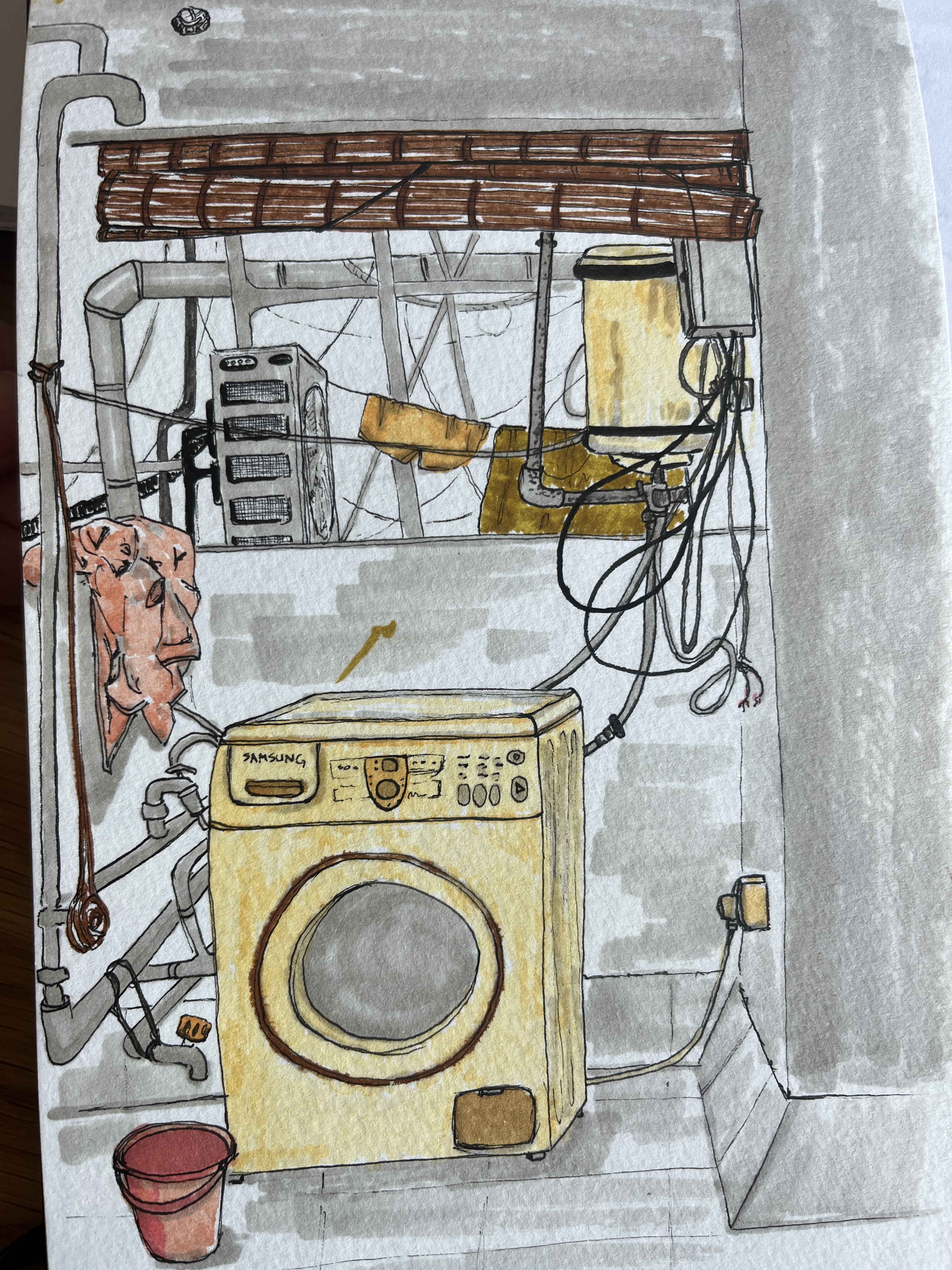
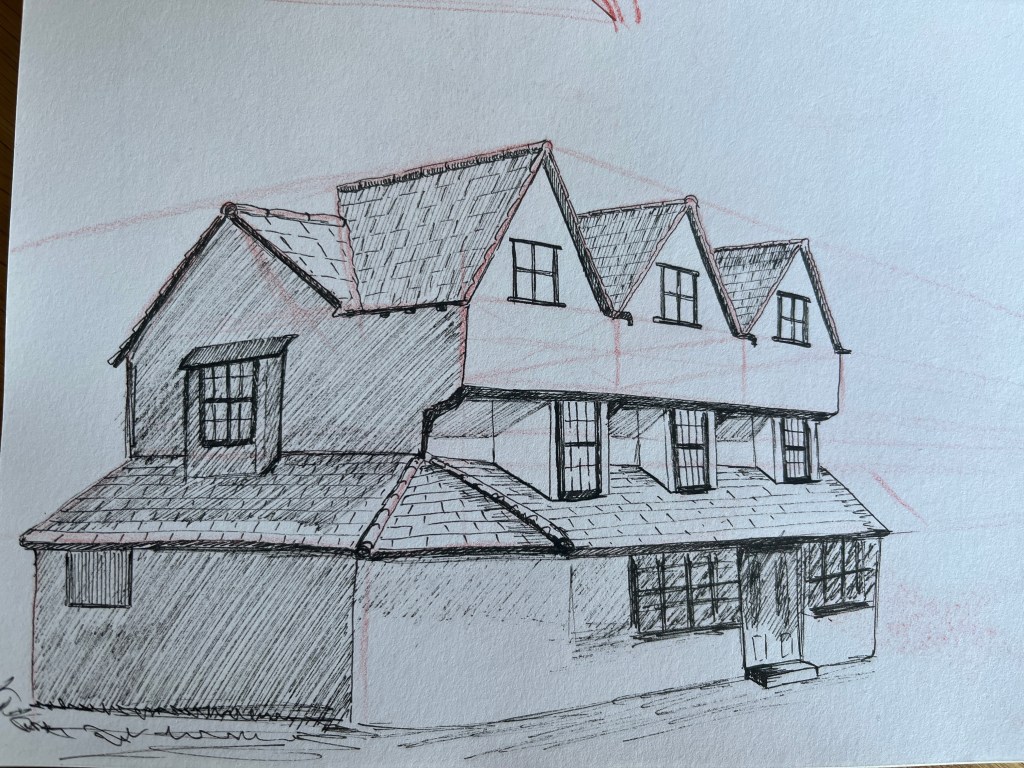
Urban sketching while traveling
Useful… or fun too?
So… yes, it turns out drawing can be really helpful — but mostly if you approach it intentionally, do specific exercises or studies, with the goal of learning and applying what you observe to your 3D work. Seems that just doodling and trying to make pretty pictures won’t really help much (even though, that’s where most fun is).
But here’s another thought:
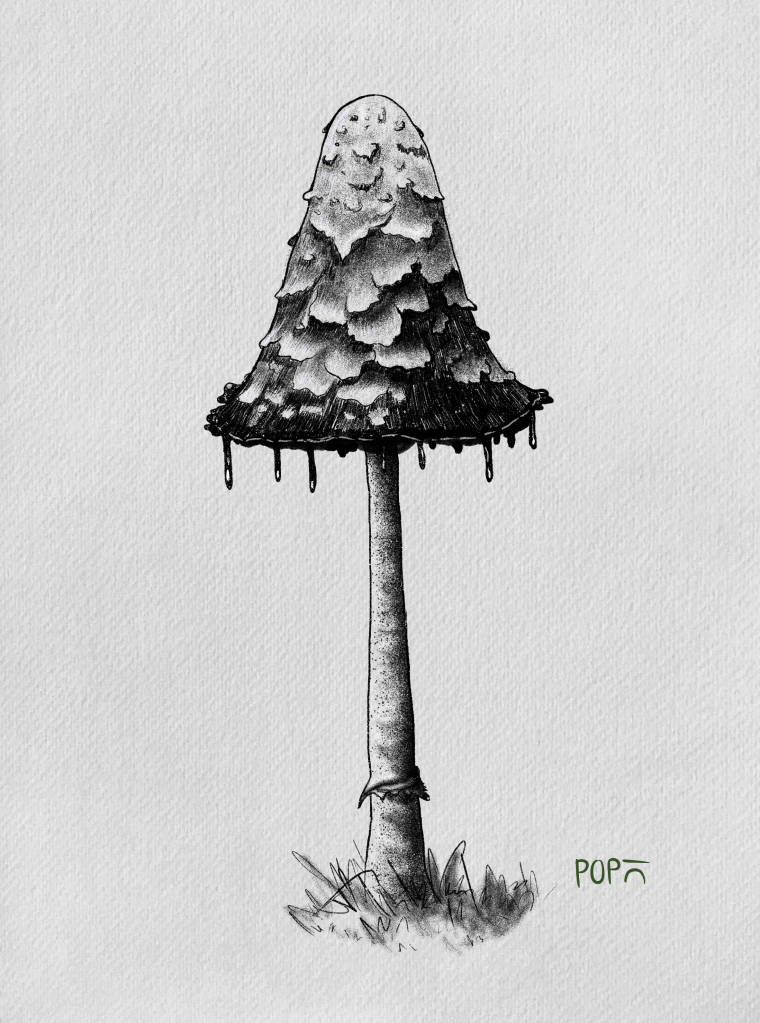
Does everything we do really have to be “useful” all the time?
Can’t some of it just be… joy? Play? Mental health?
My conclusion
After sitting with all of this and finding my answers (doesn’t mean they are necessarily true), I decided to make drawing a regular part of my practice again. But this time with more intention.
I’m aiming for 30 minutes a day of focused drawing — studies, exercises, observational work — all with the purpose of bringing that knowledge into my 3D work and becoming a better environment artist.
But outside of that? I still want to sketch just for fun.
Urban sketching when I travel. Doodling unimportant stuff. Painting just because I feel like it. No pressure to “get good” at it.
I know that without putting serious time into it, I won’t become a master but that’s okay. After all, it is not my number one priority — which was important for me to recognize. I want to draw just because it makes me happy.
And sometimes, that’s the most important reason to keep doing something.
 Render & Roam
Leave a comment